Aranya - A Cultural Oasis for Brands and Creatives in China

Amy Weng • October 7, 2024

Hi! Welcome back to our series on marketing in China! Today, we’re exploring Aranya, a thriving seaside destination in China that blends nature, architecture, and art into a creative community.


What is Aranya?

Established in 2013, Aranya is located on the coast of Qinhuangdao in Hebei. It integrates natural landscapes with modern architecture and a rich cultural scene, making it a popular travel destination. Aranya offers a wide range of experiences, with spaces like the Lonely Library, Dune Art Museum, Aranya Theater and more.


Beyond its stunning architecture, Aranya also holds emotional and spiritual value, offering a peaceful escape for those looking to reconnect with themselves. Its name, associated with 'place of serenity,' emphasizes this philosophy. As a result, it has become a magnet for lifestyle brands looking to associate with tranquility, culture, and creativity.


A Destination for Cultural Tourism and Art


Aranya is a cultural hub. The community’s slogan, “Life can be more beautiful”, is reflected in every corner, from avant-garde installations to creative pop-ups. Its spaces are self-operated and welcome a variety of niche brands, both local and international.


This same commitment to creativity and individuality extends to community building. With over 100 different interest groups ranging from photography to poetry and surfing, Aranya fosters deep connections among its residents and visitors. The result? A tightly-knit community that values creativity, aesthetics, and a slower pace of life. 


Aranya Theater Festival: A Cultural Milestone


Launched in 2021, the Aranya Theater Festival has quickly become one of the most anticipated events on the Chinese cultural calendar. Held each June, it draws tens of thousands of spectators and showcases performances from over 50 theater groups. Its most iconic event, “Migratory Bird 300”, brings together 300 artists for 300 hours of continuous creation across multiple mediums, creating an immersive artistic experience. 


Breakthrough Brand Collaborations


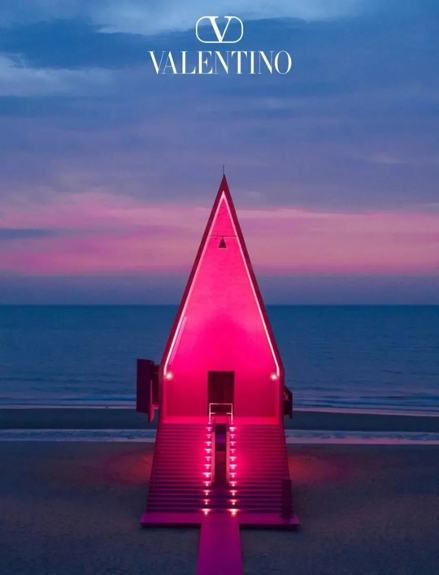
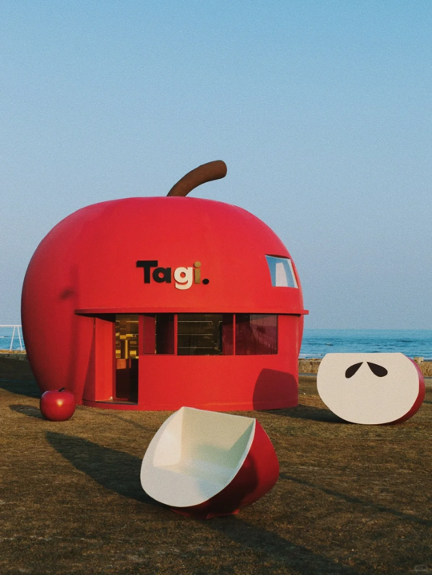
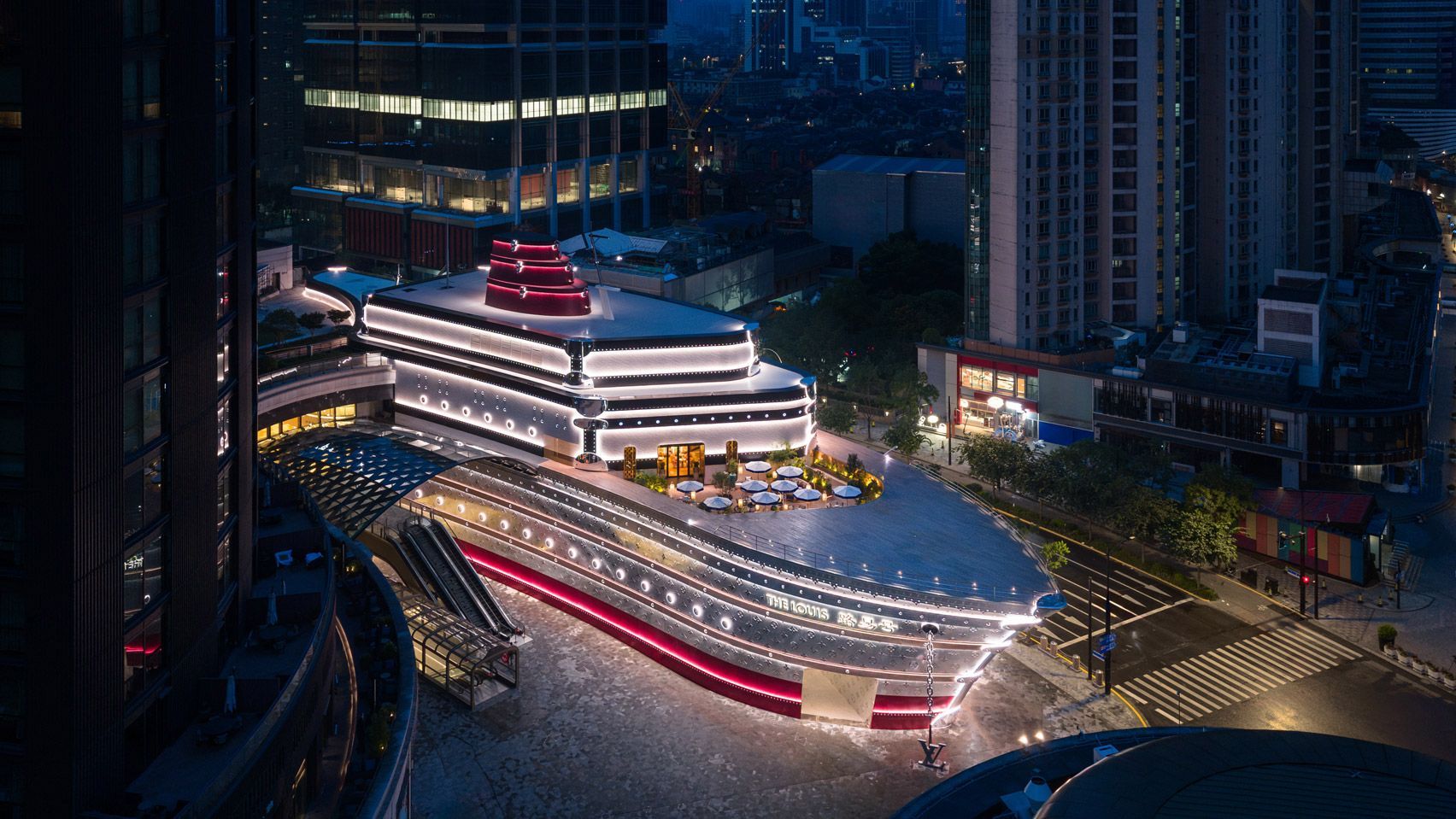
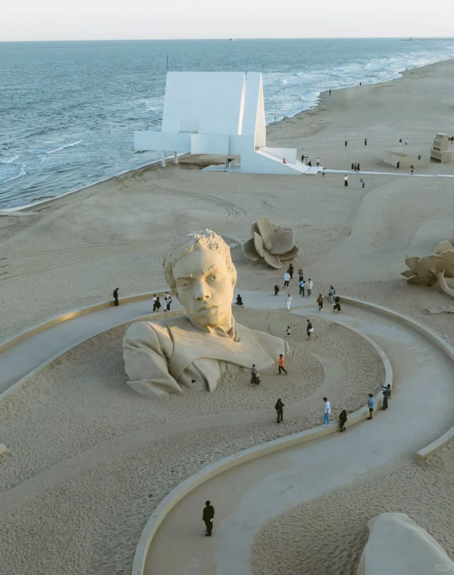
Aranya has also become a preferred venue for high-profile brand collaborations. In 2023, Louis Vuitton showcased its Spring/Summer menswear collection at Aranya, transforming the beach with giant sand sculptures. Valentino, in partnership with Pantone, turned the iconic Aranya chapel into a striking pink to celebrate its Pink PP collection. Shanghai lifestyle brand Tagi hosted viral pop-up events, including a massive apple installation that gained instant attention across Xiaohongshu. These collaborations have generated over 1.5 billion social media impressions, proving that Aranya is a powerful platform for brands to engage a sophisticated, culturally-savvy audience. 


Wrapping up, Aranya's success can be attributed to three main factors:


  • Unique Integration of Nature and Architecture: Its contemporary architectural spaces, framed by beautiful seaside views, create a peaceful yet modern environment. 
  • Vibrant Cultural Scene: From festivals to art and commercial collaborations, Aranya offers a dynamic cultural atmosphere that keeps attracting visitors.
  • Powerful Marketing: Viral moments like the “Lonely Library” alone achieved 600 million views on social media. Ongoing brand collaborations continue to drive its appeal as one of China’s hottest social media spots. 


At Think East, we keep you updated on cultural hubs like Aranya and the creative potential they offer brands. Stay connected with us on LinkedIn or reach out for more insights into China’s growing digital and social landscapes. 


Stay tuned for our next post, and connect with us on LinkedIn or via email—we’d love to hear your thoughts and questions.


See you next time!

Banner Image Credit: Aranya's official website

Images in the gallery: Red, Louis Vuitton 2023 Spring/Summer Menswear Show at Aranya; Valentino 2022 Fall/Winter Collection Launch; Tagi's Giant Apple House in December 2023


Aranya – Eine kulturelle Oase für Marken und Kreative in China


Hi! Willkommen zurück zu unserer Serie über Marketing in China! Heute tauchen wir in Aranya ein, ein angesagtes Reiseziel am Meer, das Natur, Architektur und Kunst zu einer kreativen Community vereint.


Was ist Aranya?


Aranya, 2013 gegründet, befindet sich an der Küste von Qinhuangdao in Hebei. Hier verschmelzen Naturkulissen mit moderner Architektur und einer lebendigen Kulturszene. Das macht Aranya zu einem Hotspot für Reisende, die das Besondere suchen. Von der Lonely Library über das Dune Art Museum bis hin zum Aranya Theater – Aranya bietet eine Vielfalt an aussergewöhnlichen Erlebnissen.


Doch Aranya ist mehr als nur ein architektonisches Highlight. Der Ort hat eine starke emotionale und spirituelle Anziehungskraft und ist ein Ruhepol für Menschen, die zu sich selbst finden wollen. Der Name „Aranya“ wird mit „Ort der Besinnung“ assoziiert und verkörpert genau dieses Gefühl. Kein Wunder also, dass Lifestyle-Marken hier eine Bühne finden, um sich mit Themen wie Ruhe, Kultur und Kreativität zu verbinden.


Ein Hotspot für Kultur und Kunst


Aranya ist ein kreatives Zentrum. Der Slogan „Das Leben kann schöner sein“ zieht sich durch das gesamte Areal – von Kunstinstallationen bis hin zu Pop-up-Events. Viele der Locations sind Eigenkreationen und bieten sowohl lokalen wie auch internationalen Marken eine besondere Plattform.


Auch die Gemeinschaft in Aranya ist stark auf Kreativität und Individualität ausgerichtet. Über 100 Interessengruppen, von Fotografie über Poesie bis hin zu Surfen, fördern den Austausch und die Verbindung unter den Bewohnern und Gästen. Das Ergebnis: eine enge Community, die Kunst, Ästhetik und ein bewusst entschleunigtes Leben schätzt.


Aranya Theater Festival: Ein kulturelles Highlight


Seit 2021 hat sich das Aranya Theater Festival zu einem der wichtigsten Kultur-Events in China entwickelt. Jedes Jahr im Juni lockt es zehntausende Besucher an, mit über 50 Theatergruppen, die ihr Können zeigen. Ein Highlight ist „Migratory Bird 300“, bei dem 300 Künstler über 300 Stunden hinweg nonstop Kunst in allen Formen erschaffen. Ein echtes immersives Erlebnis!


Marken setzen auf Aranya


Aranya ist auch die Bühne für namhafte Marken. 2023 präsentierte Louis Vuitton seine Frühjahr/Sommer-Menswear-Kollektion direkt am Strand von Aranya, inklusive beeindruckender Sandskulpturen. Valentino tauchte die Aranya-Kapelle in knalliges Pink, um seine Pink-PP-Kollektion zu feiern. Und die Lifestyle-Marke Tagi aus Shanghai sorgte mit einer riesigen Apfel-Installation für Aufsehen, die auf Xiaohongshu viral ging. Diese Kooperationen erzielten über 1,5 Milliarden Impressionen in sozialen Netzwerken - ein Beweis dafür, dass Aranya eine Top-Adresse für Marken ist, um ein anspruchsvolles und kulturell interessiertes Publikum zu erreichen.


Der Erfolg von Aranya basiert auf drei Kernfaktoren:


  • Einzigartiger Mix aus Natur und Architektur: Die modernen, durchdachten Räume in Verbindung mit der atemberaubenden Küstenlandschaft schaffen eine besondere Atmosphäre.
  • Dynamische Kulturszene: Von Festivals über Kunstprojekte bis hin zu Marken-Events – Aranya bietet eine lebendige Kultur, die immer wieder Besucher anzieht.
  • Starke mediale Präsenz: Virale Momente, wie die „Lonely Library“, die allein 600 Millionen Views generiert hat, und stetige Markenkooperationen sorgen dafür, dass Aranya als einer der Top-Social-Media-Spots in China gilt.


Bei Think East halten wir dich über kulturelle Hotspots wie Aranya auf dem Laufenden und zeigen dir, welche kreativen Chancen sie für Marken bieten. Folge uns auf LinkedIn oder melde dich direkt bei uns, um mehr über Chinas digitale und soziale Landschaften zu erfahren.


Bleib dran für unseren nächsten Beitrag und verbinde dich mit uns auf LinkedIn oder per E-Mail.

Bis zum nächsten Mal!


By Fiona Koh January 13, 2026
Whoever has visited China, no matter how big or small the city, will have observed one thing: Chinese elderly women line dancing in public plazas to loud Chinese pop songs blaring out of big speakers. Even late at night, the Chinese aunties dance in big groups and spend time together. Anyone who has spent some time in China will also have noticed the ubiquitous outdoor fitness parks where elderly men casually crank out pull-ups as if they’re competing in a world championship, staying fit with whatever equipment happens to be available. Furthermore, China’s “silver economy” providing products and services for the elderly is estimated at ~7 trillion yuan (~CHF 800 billion) as of 2023 and projected to reach ~30 trillion yuan (~CHF 3.4 trillion) by 2035. Such observations are in stark contrast to the Swiss landscape: Elderly are mostly seen running errands before they disappear back into their house or apartment. While some take to the mountains for hiking, everyday public life remains largely age-neutral, with older generations mostly out of sight. Beyond walking or hiking, it is uncommon to see elderly people dancing or exercising openly in public spaces. But why are the two cultures so different in how elderly find their space in society? The contrast isn’t accidental; it’s the result of history, urban design, social norms, and how each society understands aging itself. First, public space plays a very different role. In China, dense urban living and a long tradition of communal life mean that plazas, parks, and courtyards function as extensions of the home. Dancing, tai chi, or using outdoor fitness equipment is not seen as “performative” or unusual; it’s simply how one belongs to the community, and elderly people are encouraged to be part. In Switzerland, by contrast, private space is larger and more protected. Social life is more likely to move indoors or into organized clubs, and being loudly visible in public can feel intrusive rather than communal. Second, cultural attitudes toward collectivism versus privacy matter. Chinese society has deep collectivist roots. Group activities, especially among older generations, feel natural and comforting. Swiss culture places a much higher value on privacy, individual boundaries, and not “disturbing” others. Third, infrastructure and policy reinforce these norms. China has deliberately invested in free, accessible outdoor fitness parks and large plazas, especially since the 1990s. Switzerland invests heavily in nature access and healthcare, but far less in everyday, informal social infrastructure for the elderly. 
By Fiona Koh January 5, 2026
While the Chinese electric vehicle (EV) giant BYD is often the focus of European market analysis, a new competitor has already quietly entered the continent. XPENG, a technology-driven EV manufacturer, has identified Europe as the centre piece for its long-term global growth. Since 2021, XPENG has pursued European expansion. Switzerland, despite its small population, has emerged as one of XPENG’s earliest and most strategically symbolic European markets. In this article I analyse XPENG’s European strategy through the specific lens of its Swiss market launch, leveraging corporate announcements, partnership disclosures, and industry analysis from 2024 to today. Moving beyond the rhetoric of “disruption,” I examine the practical, multidimensional drivers behind XPENGs expansion: Strategic Market Choice: Why Switzerland Became XPENG’s Most Recent Key Market XPENG’s Brand Strategy and Key Differentiators: Premium AI-driven EVs Supply Chain Considerations: Local Production in Austria, The Move That Changed Everything Swiss Go-To-Market Strategy: Distribution and Trust Future Considerations and Big Picture: XPENG’s European Future, Geopolitical Considerations 1. Strategic Market Choice: Why Switzerland Became XPENG’s Most Recent Key Market XPENG kicked off its European expansion in 2021, entering markets with established EV adoption, such as Norway, Sweden, the Netherlands, and Denmark. The company deepened its continental presence in 2024 by launching in the key automotive hubs of Germany, France, the UK, and Italy. Now, as of late 2025, XPENGs strategy focuses on rapid European market expansion to achieve comprehensive European coverage. A significant new market in this phase is Switzerland. Unlike the Nordic nations, which are recognised leaders in EV adoption, Switzerland has a different market profile, characterised by high purchasing power but more moderate EV penetration (see Graph 1). This raises a key strategic question: why would XPENG prioritise Switzerland as an early and important market? Switzerland is a small country and not an EV-heaven like the Nordics (see Graph 1). So what makes Switzerland a strategic choice for XPENG? My analysis suggests three primary factors that make Switzerland a strategically attractive entry point for XPENG: High EV Adoption Rate: Switzerland is a logical next step in XPENG’s market expansion. As shown in Graph 1, the country has one of the highest electric vehicle adoption rates in Europe, following closely behind the Nordic markets where XPENG first established its European presence. By entering Switzerland, the company directly targets a large customer base that is already familiar with and receptive to electric mobility, reducing the need for extensive consumer education on EV technology. Absence of a Domestic Auto Industry: Switzerland lacks a significant domestic car manufacturing sector compared to Germany or France, where XPENG is already active. Consequently, XPENG enters a market largely free from the protective industrial policies or legislative measures often designed to shield local automakers from international competition. This creates a more open and less politically complex competitive landscape. Strong Purchasing Power and Premium Market Affinity: The Swiss market aligns well with XPENG’s premium positioning. Data indicates that Swiss consumers are accustomed to new car prices in the range of CHF 60,000 and above, which corresponds directly with XPENG’s pricing strategy. Furthermore, the market exhibits a strong and sustained preference for premium automotive brands, with BMW, Audi, and Mercedes-Benz consistently holding large market shares. This consumer behaviour toward high-value vehicles provides a favourable environment for XPENG to position itself as a technology-focused alternative within the premium segment.
By Amy Weng April 21, 2025
When On entered the Chinese market in 2018, it followed a traditional B2B wholesale model, focusing on wholesale distribution. By 2021, the brand started shifting toward direct-to-consumer (D2C) retail , preparing for standalone stores. Then, COVID-19 disrupted expansion plans, delaying progress until 2023, when On was finally able to accelerate its retail growth. How did a Swiss sports brand establish itself in China so quickly and compete with industry giants like Nike and Adidas? Instead of relying solely on product sales, On built a running culture. The brand positioned itself around community, performance, and innovation, creating a lifestyle-driven experience while maintaining its strong athletic identity. 2024: A Year of Expansion & Engagement Last year, On introduced a series of campaigns and retail activations that reinforced its presence in China: March – "Dream" campaign launch with a focus on music June – Collaboration with Loewe, combining innovation and fashion August – Opened new stores in Hong Kong, Wuhan, and Nanjing December – Launch of Cloudboom Strike LS, a high-performance running shoe for marathoners Shanghai Running Community Store: A Minimalist Hub for Runners At its West Bund flagship store , On took a different approach to retail. Rather than creating a traditional shopping experience, the store was designed as a community hub for runners . The space feels more like a gathering point for athletes than a commercial store. One of the store’s key activations was the exclusive Cloudboom Strike LS shoe release , limited to 48 pairs . These shoes were given to athletes, with a few left in-store for runners to test. This initiative strengthened On’s connection with dedicated runners and reinforced its reputation as a brand built for performance. How On Activated the Community at West Bund: Influencer & PR Strategy – Sports media and dedicated athletes took center stage instead of traditional KOL-heavy promotions. Cloudboom Strike LS Shoe Activation – Professional runners engaged directly with the product. Panel Discussions with Athletes – Conversations around running performance and innovation. Community Spaces & Benefits : 10 running groups with over 200 participants Changing rooms & free shoe rentals for trial runs Pet-friendly facilities for runners with dogs By focusing on engagement rather than direct sales, On built strong connections with the running community, strengthening brand loyalty and authenticity. What's Next? On is expanding its community-driven approach with: More localized running events & meetups More experiential store openings designed for interaction Expansion beyond running into sports like tennis Shanghai Spring Pop-Up – An activation promoting CloudTec Phase® technology through immersive design. On’s strategy in China goes beyond retail, turning stores into spaces where runners can meet, test products, and connect with the brand. At Think East, we keep you updated on the strategies brands use to succeed in China’s dynamic market. If you’re a new brand looking to enter the Chinese market or refine your approach, reach out to us. We’re here to help you craft a strategy that works for your goals. Stay tuned for our next post, and connect with us on LinkedIn or via email—we’d love to hear your thoughts and questions. See you next time!