Chinese Elders vs. Swiss Elderly
Whoever has visited China, no matter how big or small the city, will have observed one thing: Chinese elderly women line dancing in public plazas to loud Chinese pop songs blaring out of big speakers. Even late at night, the Chinese aunties dance in big groups and spend time together. Anyone who has spent some time in China will also have noticed the ubiquitous outdoor fitness parks where elderly men casually crank out pull-ups as if they’re competing in a world championship, staying fit with whatever equipment happens to be available. Furthermore, China’s “silver economy” providing products and services for the elderly is estimated at ~7 trillion yuan (~CHF 800 billion) as of 2023 and projected to reach ~30 trillion yuan (~CHF 3.4 trillion) by 2035.
Such observations are in stark contrast to the Swiss landscape: Elderly are mostly seen running errands before they disappear back into their house or apartment. While some take to the mountains for hiking, everyday public life remains largely age-neutral, with older generations mostly out of sight. Beyond walking or hiking, it is uncommon to see elderly people dancing or exercising openly in public spaces.
But why are the two cultures so different in how elderly find their space in society? The contrast isn’t accidental; it’s the result of history, urban design, social norms, and how each society understands aging itself.
First, public space plays a very different role. In China, dense urban living and a long tradition of communal life mean that plazas, parks, and courtyards function as extensions of the home. Dancing, tai chi, or using outdoor fitness equipment is not seen as “performative” or unusual; it’s simply how one belongs to the community, and elderly people are encouraged to be part. In Switzerland, by contrast, private space is larger and more protected. Social life is more likely to move indoors or into organized clubs, and being loudly visible in public can feel intrusive rather than communal.
Second, cultural attitudes toward collectivism versus privacy matter. Chinese society has deep collectivist roots. Group activities, especially among older generations, feel natural and comforting. Swiss culture places a much higher value on privacy, individual boundaries, and not “disturbing” others.
Third, infrastructure and policy reinforce these norms. China has deliberately invested in free, accessible outdoor fitness parks and large plazas, especially since the 1990s. Switzerland invests heavily in nature access and healthcare, but far less in everyday, informal social infrastructure for the elderly.
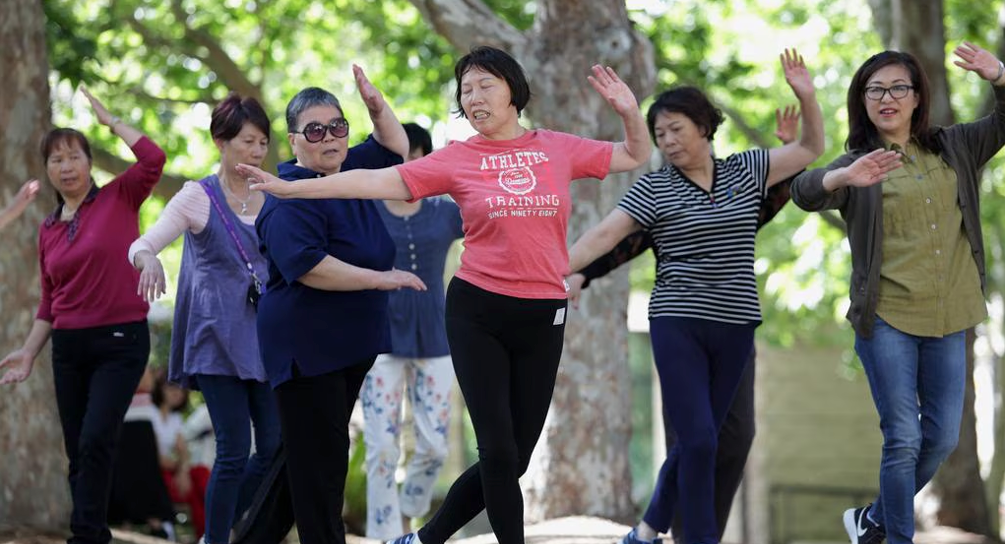
Photo 1: Elderly Chinese women performing a line dance /Timothy Clapin
What risks and opportunities does Switzerland’s privacy- and quiet-first approach to aging create for its elderly population and society at large?
Privacy can quietly turn into isolation. When elderly life is largely hidden indoors, early signals of cognitive decline, depression, or mobility loss are harder to detect by neighbors, communities, and even public institutions. In contrast, studies from China show that social participation is significantly associated with higher life satisfaction and self-rated health among older adults in China. For Switzerland, the lack of this social integration of elderly raises downstream healthcare costs and crisis-driven interventions.
Swiss seniors are among the healthiest and wealthiest globally, yet many of their active years remain socially underleveraged. A quiet-first culture risks treating retirement as withdrawal rather than transition, therefore reducing intergenerational exchange, volunteering, and informal care.
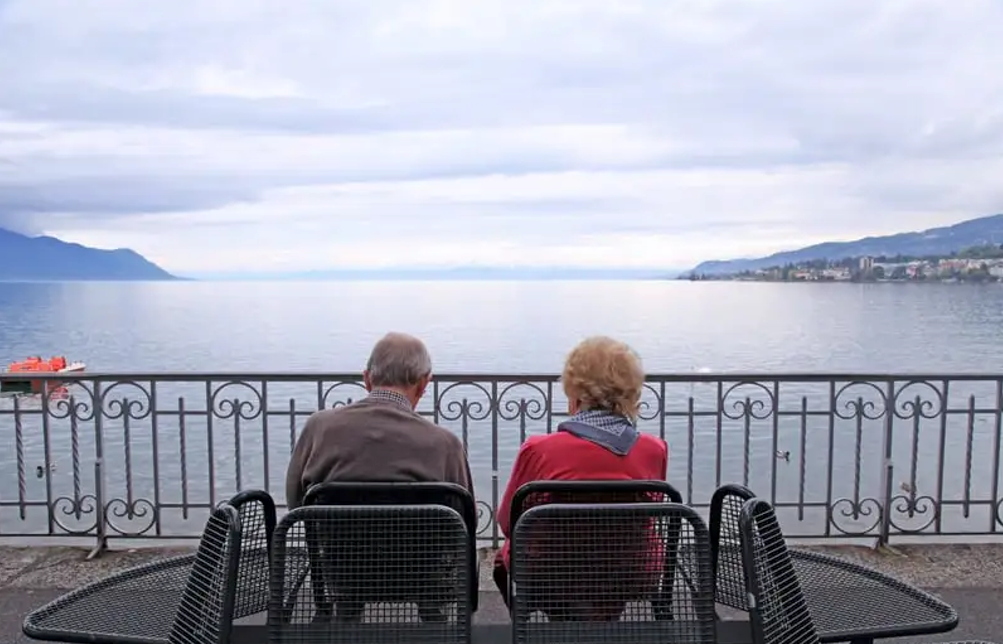
Photo 2: An elderly Swiss couple enjoying the lake views /Inna Felker
What can Switzerland learn from China, and how can elderly be better integrated into society to reduce age-related challenges?
In China, elderly activity is normalized and socially accepted. No one asks why seniors are dancing at 10 p.m., it’s expected. In Switzerland, aging often becomes invisible once people stop working. New public narratives can frame aging as a phase of continued participation rather than withdrawal.
Chinese fitness parks and dance groups require no registration, payment, or digital literacy. Swiss solutions often rely on clubs, memberships, or formal programs–which filter out many people. The easier it is to join, the more inclusive and preventive it becomes.
China implicitly treats social interaction as part of public health. Switzerland excels at medical care but underweights social connectedness as a health input. Therefore, investing in social presence early reduces healthcare and care-dependency costs later.
Fiona Koh writes about China’s global expansion and how Chinese brands scale in Europe’s small but strategic markets. She is a Schwarzman Scholar at Tsinghua University in Beijing, pursuing a Master’s in Global Affairs. Fiona is also one of Think East’s guest contributors this year. This article is republished with permission. Follow Fiona’s writing on Substack.