The Experience Is The Product
In China’s luxury market, a flagship now competes with museums, restaurants and pop culture events for the same two hours of a consumer’s afternoon. The brands winning that competition are not playing by European rules.
The store has become one of the most contested ideas in luxury. In China, it now carries a workload that many European flagships still do not. It has to sell, of course. It also has to stage a world, generate traffic, travel across social media, and justify why a consumer should spend an hour there before deciding whether to spend anything at all.
That shift is visible in Shanghai. Louis Vuitton opened The Louis in June 2025: a 30-meter, ship-shaped structure designed by Shohei Shigematsu of OMA, housing exhibition space, retail floors, and a café on Nanjing Road. Prada turned Rong Zhai, a restored 1918 mansion it has owned since 2011, into a permanent hospitality address with Mi Shanghai Prada Rong Zhai, its first standalone dining space in Asia, with Wong Kar Wai commissioned to design the interior. Penhaligon’s chose Shanghai for its first fragrance exhibition anywhere in the world, in April 2025. The message is consistent: China is not receiving a standard flagship strategy with local adaptations. It is being used as the testing ground for a different, grander format altogether.
The timing is not accidental. Bain estimates that China’s personal luxury market fell 17–19% in 2024 and a further 3–5% in 2025, before returning to modest growth in 2026. Chinese consumers still account for approximately 23% of global luxury demand, per Bernstein. In a market like that, brands do not retreat from visibility. They rethink what visibility has to do.
What The Consumer Expects
Bluebell Group’s 2025 consumer research found that 96% of surveyed mainland Chinese respondents said experiential value now outweighs product ownership in how they define luxury. 46% want immersive, brand-led experiences in store, with staff actively involved in storytelling. The same study found that 92% prioritise the quality of the product over brand name, and 88% say higher prices are justified when the underlying craft is evident. The appetite for theatre is real. So is the demand for substance underneath it.
What a luxury space is expected to deliver has changed accordingly. Narrative density comes first: consumers expect an entire world. Social legibility is equally non-negotiable: the space needs to circulate on Xiaohongshu or Douyin, because store traffic and digital visibility now feed each other directly. And in Asia, Bluebell found that in-store service standards are perceived as higher than elsewhere, which raises the baseline for every international brand operating there. The experiential minimum is a moving target.
The New Flagships
Louis Vuitton's ship is the clearest statement of the new model. The structure spans approximately 1,600 square metres. Entry is managed through the brand's My LV WeChat mini program: even free admission is controlled. The early returns suggest the model works. According to Wen Wei Po, 60% of sales at The Louis come from new clients – a statistic that directly addresses the industry's central question of whether experience-driven flagships merely entertain existing customers or actually expand the customer base. The impact extends beyond the store itself. In its first four months, the exhibition drew over 360,000 visitors, according to Shanghai government data. Daily foot traffic at The Louis has reached 20,000 on peak weekends, and the surrounding commercial district has seen a clear lift: the adjacent Xingye Taikoo Hui mall recorded a 41.9% increase in retail sales during the first nine months of 2025, while other surrounding businesses reported sales doubling. The ship has effectively become an anchor, transforming Nanjing Road into a destination where a luxury flagship now functions as a catalyst for an entire neighbourhood.
Prada’s Rong Zhai shows a different register. Commissioning the iconic Hong Kong filmmaker Wong Kar Wai to design Mi Shanghai Prada Rong Zhai signals where Prada is locating cultural authority in China: not in European craft narrative, but in Chinese creative identity. The space weaves art, architecture, food and time into a single address. It seems quieter than The Louis, but no less deliberate. According to the Prada Group’s full‑year 2025 earnings, Asia Pacific retail sales reached $1.85 billion, an 11% increase year-on-year. This remains the most relevant proxy for Prada’s performance in Greater China, including the period when the Mi Shang Café at Rong Zhai was operational.
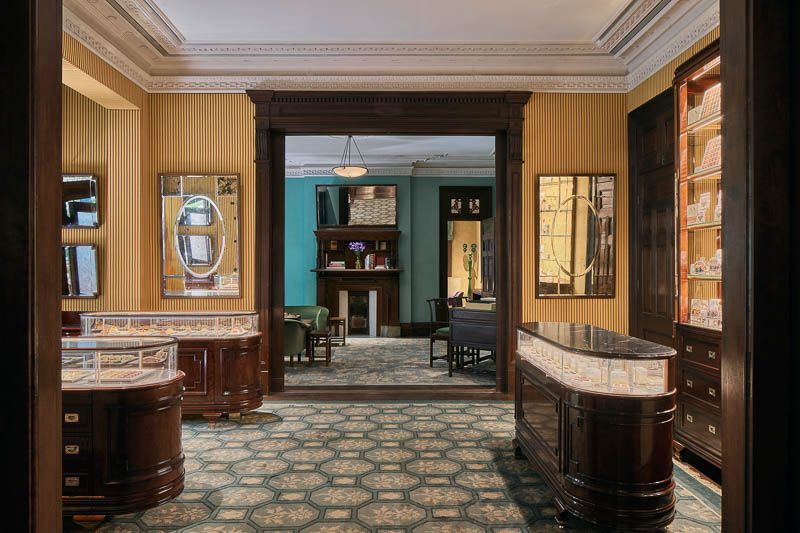
Photo: Mi Shang Prada Rong Zhai in Shanghai
Gentle Monster understood the assignment early. Its HAUS Nowhere on Middle Huaihai Road spans 3,350 square metres across four floors; following a revamp in March 2024, 80% of the space is dedicated to art installations and experiential programming, with retail occupying just 20%. The strategy delivered measurable results. According to Pulse (Maeil Business News Korea), the brand’s parent company IICOMBINED reported 2024 global revenue of 789.1 billion KRW (approximately $572 million) and operating profit margins of 29.6% – figures that rival or exceed many European luxury houses. China contributed 120.7 billion KRW, holding steady even as the broader market contracted. The discomfort for European luxury is clear: a mid‑market eyewear brand from Seoul has set the experiential reference point on one of Shanghai’s most prominent retail streets.
The Platform Effect
Physical experience and digital distribution are the same channel in China. On Xiaohongshu, a store visit becomes peer testimony before it becomes brand content. Visitors document queue times, spatial details and the distance between campaign imagery and what they found inside. A store that does not generate this content is effectively invisible to the cohort that sets consumption norms.
The Moncler City of Genius event, held along the Huangpu River in October 2024, illustrates the scale this logic can reach: 30,000 square metres, an investment reported at over $20 million, with creative zones led by Rick Owens and Hiroshi Fujiwara. The in-person audience was 8,000. The livestream audience across WeChat, Douyin and Xiaohongshu was 57 million. The event is over; the documentation is permanent.
The Limits of the Model
There is a contradiction underneath all this investment. The more cautious the market becomes, the more energy brands are directing into experience. Bain reported that in 2025, 65% of all Chinese luxury purchases were made on the mainland, while the secondhand segment expanded 15–20% over the same period. Consumers are scrutinising value more closely, and brands are responding with environments designed to rebuild conviction. Experience has become part of the value argument.
The brands building ships and converting mansions are making significant capital commitments in a market that contracted for two consecutive years. Yet for those that have committed, early returns are tangible, and they are not coming from the usual suspects. At Louis Vuitton's ship, the crowds are not exclusively high‑net‑worth Shanghainese locals. Elderly groups, and visitors from other Chinese cities queue for reservations, drawn by the spectacle and the social currency of having "been there." The restaurant at The Louis, expensive but designed for photos, fuels this aspirational traffic. Yet remarkably, 60% of sales at The Louis come from new clients. A student who came to take pictures walks out dreaming of her first LV bag. The aspirational mid‑tier consumer may still be cautious, but for those who step into a real brand experience, the line between "just looking" and first purchase is blurring.
In China, the flagship now functions as evidence: that the brand still has enough imagination, relevance and cultural confidence to deserve a place in the city. Whether that evidence translates into sustained purchase decisions across a broader consumer base is a question the market will continue to answer.
Amy Weng is a China market expert and founder of Think East. She advises luxury houses, consumer brands, Swiss institutions, and senior executives seeking a deeper understanding of the Chinese market. Amy speaks regularly on topics including China’s digital landscape, Young China, and the forces reshaping Chinese consumer culture. Her work bridges the gap between Western brands and one of the world’s most sophisticated consumer audiences.
This article was originally published on Luxury Tribune, the reference media for the global luxury industry.