Switzerland, Asia and the Future of Executive Education - A Conversation with Jürgen Brücker

Interview by Amy Weng • May 18, 2026

Jürgen Brücker, CEO of UZH Executive Education, is direct about where the industry stands: a large part of today’s executive education is no longer fit for purpose. His response is UZH Executive Education's Vision 2030, centred around three words: connect, empower, inspire. At Think East, we are interested in how leaders and institutions build stronger bridges between Europe and Asia. We spoke with Jürgen about the future of executive education, Asia’s growing role in global business, and the role Switzerland can play in an increasingly fragmented world.
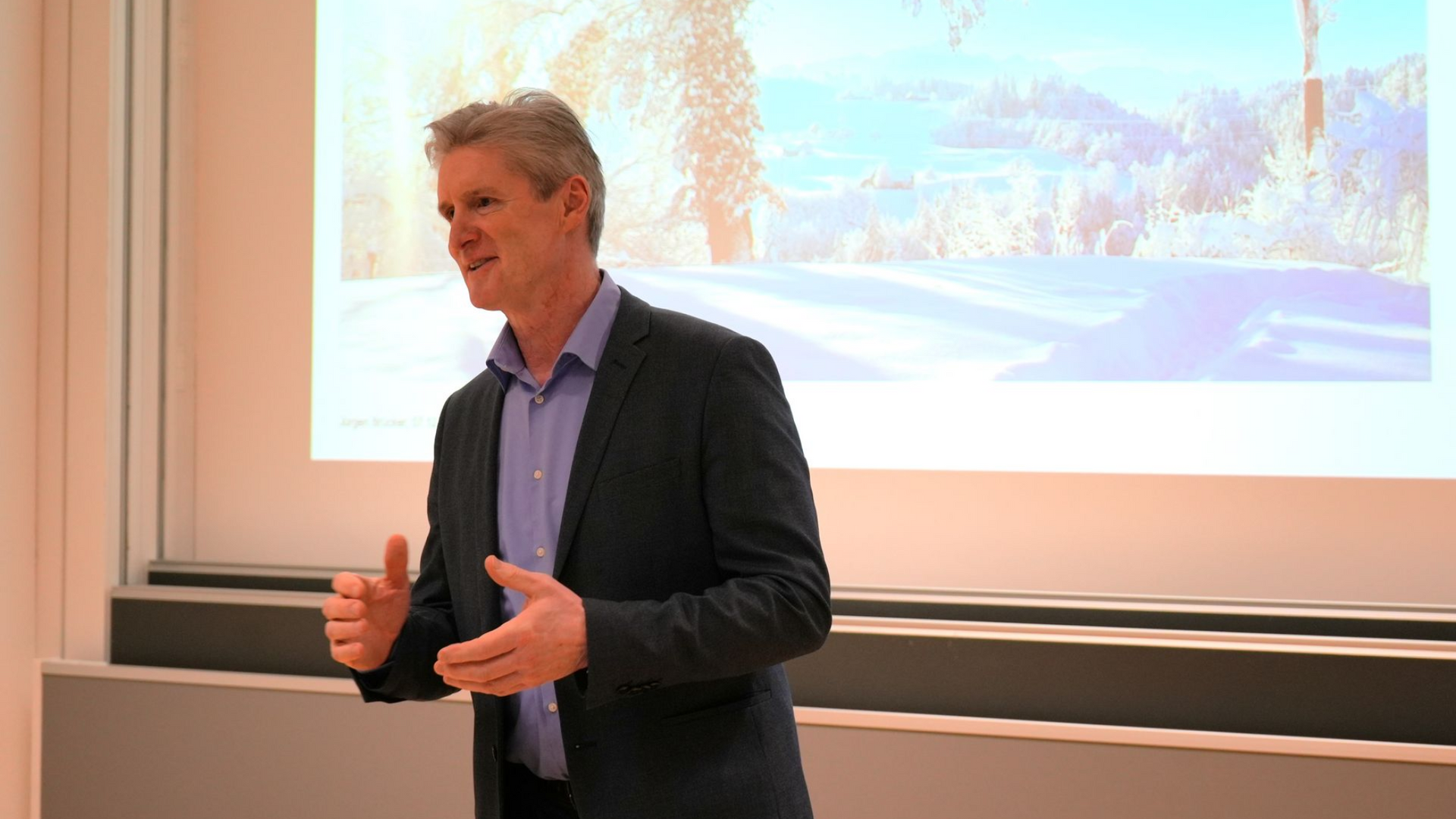
Photo: Jürgen Brücker, CEO of UZH Executive Education


Setting the Vision

When you look at the next five to ten years, what shifts do you expect in global executive education, and what role should institutions like UZH play in that transformation?

Executive education is about to fundamentally change, moving from isolated programmes to real learning ecosystems. Leaders today and tomorrow expect orientation, exchange, and relevance in a world that is becoming increasingly complex and less predictable. Executive education needs to close this gap by developing new formats and, importantly, by putting research into real-world context and vice versa. Very few institutions are truly capable of doing that.

Frankly, a large part of today’s executive education is no longer fit for purpose: too slow, too isolated, and too far removed from a reality where AI already supports decision-making.

Our response at UZH Executive Education is clearly defined in our Vision 2030: Connect. Empower. Inspire.

       Connect: We bring together people, perspectives, and systems, across industries, functions, and regions.

       Empower: We equip leaders not just with knowledge, but with the ability to make better decisions.

       Inspire: We create environments where new, pioneering ways of thinking emerge, not as theory, but as lived experience.

For us, this means moving beyond isolated programmes towards a thematic portfolio embedded in an ecosystem that remains relevant over time.


Europe and Asia Connectivity

What does Asia represent to European business leaders today that it did not ten years ago?

Asia is no longer just a market. It is a pace-setter. Many of the developments that European companies are facing today, and even more so in the future, originate in Asia: digital business models, platform economies, and the sheer speed of execution. Europe still systematically underestimates how fast and consistently innovation is developed and implemented in Asia, and is already paying the price.

The conclusion is simple: if you don’t understand Asia, you don’t understand key dynamics of the global economy.

What makes Switzerland an attractive partner or study destination for Asian professionals?

Switzerland stands for trust, quality, and neutrality. These attributes have become a real strategic advantage in an increasingly fragmented world. At the same time, Switzerland offers access to excellent research, strong industry connections, and the ability to bridge different economic and cultural systems. Combined with its central location in Europe, this makes it a highly attractive and globally connected hub.


EABM and International Positioning

What kind of leaders do you want to attract to EABM, and what mindset should they bring?

We are looking for individuals who see themselves not only as participants in organizations, but as proactive contributors to their evolution.

The EABM is designed mainly for young professionals with a strong sense of curiosity, responsibility, and determination to challenge their own perspectives. What matters is not a perfect profile, but the willingness to engage with complexity, to step outside familiar contexts, and to actively shape outcomes rather than simply respond to them.

The most valuable candidates are those who combine intellectual openness with a strong drive for impact. They are interested in understanding systems across regions, industries, and cultures, and in translating that understanding into meaningful action.

In that sense, the program attracts what we would call “global citizens”: individuals who are motivated to grow personally, contribute professionally, and take responsibility for the broader context in which they operate.


How do you see programmes like EABM contributing to stronger Europe and Asia business bridges over time?

Programs like EABM contribute to Europe and Asia connectivity not through abstract knowledge transfer, but through sustained interaction in a shared learning and working environment.

The distinctive element is the integration of real business contexts into the learning journey. Participants do not only study international business relations. They actively work on real-time projects within organizations, often in collaboration with partners across regions. This creates a depth of understanding that cannot be achieved through traditional formats. Trust is not built in classrooms. It is built through shared experience.

In that sense, programs like EABM are not educational products. They are trust infrastructure. When participants from Asia and Europe collaborate over several months, through study and real business projects within a shared ecosystem, a common understanding emerges. And that shared understanding is the foundation for sustainable business relationships.

Over time, this leads to something more fundamental: a network of individuals who have learned to think, decide, and collaborate across systems. These networks evolve into long-term professional relationships between regions.

Ultimately, this is what EABM is about: connection, empowerment, and inspiration across regions.
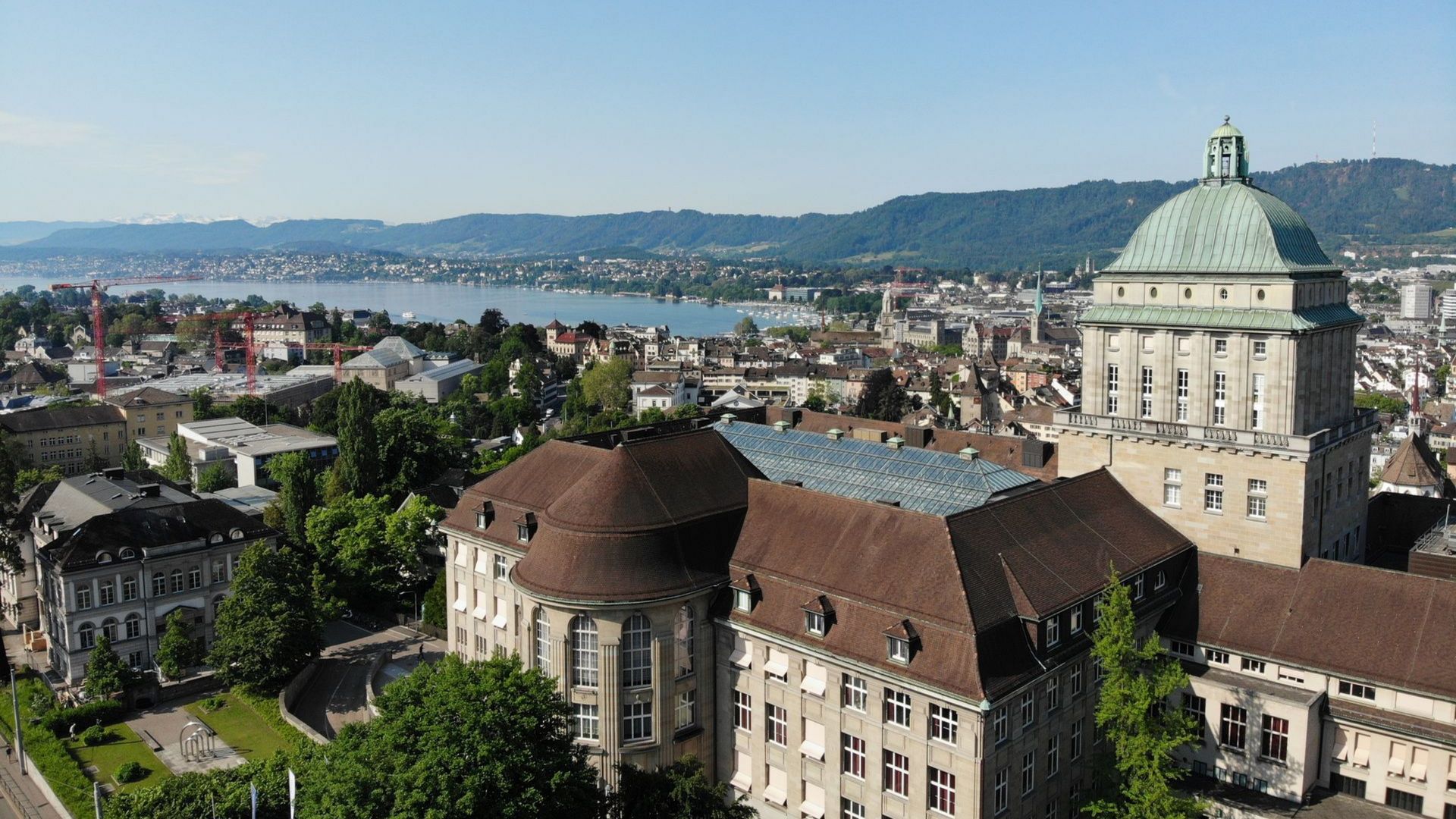

Photo: University of Zurich


Leadership in a Multipolar World

We are moving into a more complex, multipolar environment. What capabilities will tomorrow’s executives need that today’s leadership development often fails to build?

One of the most critical capabilities will be the ability to remain effective under uncertainty. Many educational formats still suggest that complex problems have clear answers. That is not the reality.

We need to focus much more on judgment, contextual understanding, and systems thinking, while also leveraging AI as a powerful support tool. Leadership today is less about having the right answer. It is about making good decisions under uncertainty.


Technology, AI and the Speed of Change

Asia, and China in particular, is driving innovation in digital ecosystems, AI and platform economies at a pace that surprises many European executives. How should business education respond, and do you think schools need to fundamentally rethink how strategy is taught?

The rules of the game have clearly changed. Strategy used to be something you could plan in a linear way. Today, strategy is a continuous process: highly data-driven and closely linked to technology. Speed is becoming a strategic capability in itself.

Anyone who still treats strategy as a PowerPoint exercise has already lost touch with reality. Executive education must respond accordingly: faster, closer to real-world challenges, and significantly more experimental. Theory still matters, but it must be combined with real work on relevant issues, embedded in a professional ecosystem.


Personal Outlook

On a personal note: what motivates you most about building international programs and partnerships?

What motivates me is building things that would not exist otherwise. Bringing people together, opening perspectives, and enabling real development: that is what drives me. At its core, it always comes back to the same idea I strongly identify with: connect, empower, inspire, just on a global scale.


If you could give one piece of advice to professionals who want to build careers between Europe and Asia, what would it be?

Interestingly enough, my advice has remained exactly the same: go abroad, and stay long enough. Intercultural understanding does not develop in meetings or on short business trips. It comes from truly immersing yourself in another system. And most importantly: learn how to translate between worlds. That will become one of the most valuable leadership capabilities of all.


Are you a leader shaping business between Europe and Asia and want to be featured in our next interview? Get in touch now.

By Amy Weng March 16, 2026
Formula 1 returned to Shanghai this weekend to a sold-out circuit and 221 million Chinese fans. Luxury brands have been paying close attention. The sport's China moment has arrived. On Sunday afternoon, Kimi Antonelli crossed the finish line at the Shanghai International Circuit to claim his first Formula 1 victory. The youngest Grand Prix polesitter in the sport's history converted pole position into a commanding win before a capacity crowd. Lewis Hamilton took his first podium in Ferrari red at the circuit where, twelve months earlier, he had claimed a sprint victory before a disqualification ended his Grand Prix weekend. The racing was close, unpredictable and genuinely dramatic. In the stands, 220,000 spectators watched a sport that, in China, has become one of the most significant luxury marketing opportunities of the decade. The spectacle on track was compelling. The story in the grandstands is arguably more so. 221 Million Fans and Counting The scale of Chinese F1 fandom is not widely understood outside the industry. According to Formula 1's own 2025 season review, China now has 221 million self-identified fans, second only to Europe as a market, and representing a 39% increase in a single year. This weekend's Grand Prix sold out entirely. Formula 1's Chinese social media platforms, including Weibo, Douyin, Xiaohongshu, and WeChat, grew 35% in 2025 alone. The profile of the Chinese F1 fan matters as much as the scale. According to Formula 1's 2025 Global Fan Survey, 46% of Chinese fans are female and 40% are aged between 16 and 34. Over half came to the sport within the last five years, most through social media and streaming rather than broadcast television. This is a young, digitally fluent, predominantly urban consumer base that discovered Formula 1 as a cultural phenomenon: something to follow, attend, discuss, and wear. The parallels with China's luxury consumer are not coincidental. They are, to a remarkable degree, the same person: young, urban, educated, spending on experience and identity as much as objects. The F1 fan in China and the luxury consumer in China overlap in ways that the most attentive brands have already begun to act on. What Luxury Brands Understood First In October 2024, LVMH announced a 10-year global partnership with Formula 1, reportedly valued at more than $100 million per year, making it one of the largest sponsorship agreements in the history of sport. Louis Vuitton, TAG Heuer, and Moët Hennessy are the three Maisons leading the activation. TAG Heuer replaced Rolex as the sport's official timekeeper. Moët & Chandon returned to podium celebrations. Louis Vuitton now crafts the bespoke trophy trunk handed to each race winner, including the one presented to Antonelli in Shanghai on Sunday. The partnership, as framed by Bernard Arnault, was premised on Formula 1 having become one of the most desirable sports in the world. The China dimension is central to that logic. Louis Vuitton's recent Shanghai activations, including The Louis concept space at HKRI Taikoo Hui and its maritime heritage exhibitions, have already demonstrated the brand's understanding that Chinese luxury consumers want cultural experience as much as product. An annual Grand Prix in Shanghai gives LVMH a moment of live, shared spectacle in the market that matters most. The trophy trunk is a piece of brand communication as much as it is a piece of luggage. Other brands are moving with equal purpose. Ahead of this weekend's race, Tumi brought Lando Norris, the reigning world champion, onto a Douyin livestream to engage Chinese fans directly. It is a precise articulation of the opportunity: a global sports star, a platform built for the Chinese digital consumer, and a brand repositioning itself for a younger audience through the cultural equity Formula 1 now carries in China. The activation required no translation. The audience already knew who Norris was.
By Amy Weng March 13, 2026
China accounts for about 62% of the world’s self-made women billionaires, according to the Hurun Global Rich List. At the same time, data from the Global Entrepreneurship Monitor's 2023/2024 report shows that China is among the rare economies worldwide where women's startup rates match or exceed those of men, and it has a generation of university graduates that is now majority female. It is also a country where the government actively encourages women to marry earlier, have more children, and return to domestic life. The she economy lives in the tension between those two realities. China's female consumer base controls an estimated $1.4 trillion in annual spending, according to Accenture research. They influence 70% of all household purchases and, in a shift that would have been culturally unimaginable a generation ago, now direct a majority of their personal spending toward their own needs rather than those of their families, according to JD.com research. Who They Are The she economy did not emerge from a single city or a single demographic. Its most visible architects sit at the very top of global wealth rankings. Zhong Huijuan left a job as a chemistry teacher to found Hansoh Pharmaceutical in Jiangsu, building it into one of China's leading oncology and psychotropic drug companies; by mid-2025 she ranked first in Asia and third globally on Forbes' list of self-made women billionaires, with a fortune of approximately $19.7 billion. Wu Yajun arrived at entrepreneurship from a different direction: factory floor technician earning $16 a month, then property journalist, before co-founding Longfor Properties in Chongqing in 1993, a company that grew into one of China's largest real estate developers. Wang Laichun, chairwoman of Luxshare Precision Industry, spent years on Foxconn's assembly lines before building the company that now manufactures Apple's AirPods and rivals Foxconn across Apple's supply chain; the 2024 Fortune list ranked her the most powerful woman in business in Asia. The geographic picture is equally important. A significant share of Chinese female internet users now live outside the traditional tier-one cities. Hangzhou, Chengdu, Wuhan, Xi'an, Nanjing: these are not secondary markets. They are where consumption habits are being formed, where new platforms find their earliest adopters, and where brand loyalty, or its absence, is decided. A 32-year-old finance professional in Hangzhou and a 28-year-old designer in Chengdu may have similar purchasing power and entirely different ideas of what makes a product worth owning. Spending on the Self The founders described above illustrate the female economic power at the top. The same shift is also visible in how women are spending. One of the most structurally significant shift in the she economy is the direction of spending. In 2023, Chinese women purchased 8.23 million vehicles, up 10.6% year-on-year, according to Yiche Research Institute, a category that was almost exclusively male-dominated a decade ago. Women are also increasingly central in homebuying decisions. Surveys suggest that more than 80% of property purchases now involve female decision-makers. Wellness, travel, and self-education have become the fastest-growing spending categories among urban women under 40. This is not consumption for its own sake. These spending patterns reflect a generation of women who came of age in a different educational and economic environment. Women now account for 63% of all higher education enrolment, outnumbering men at undergraduate level and in several postgraduate disciplines, according to China's Ministry of Education. They are applying the same rigour to purchases as to careers. The luxury resale market is part of this logic: platforms like Plum, which specialises in pre-owned luxury goods, are overwhelmingly female-driven, combining value-consciousness with the kind of careful curation that defines this cohort's relationship with objects.
By Eini Kärkkäinen February 10, 2026
When Adidas released its Tang jacket ahead of Lunar New Year 2024, it was intended as a limited regional drop for Mainland China, Hong Kong, Macau, and Taiwan. Instead, it became one of the most recognizable fashion phenomena in China’s modern streetwear scene. Queues formed outside flagship stores, social media buzzed with styling posts, and resale prices surged. By 2026, the jacket had evolved from a seasonal item into a cultural symbol. Its resonance, however, came from more than design alone. It captured a pivotal moment in China’s emotional landscape. Post-COVID Reconnection with Cultural Identity The pandemic reshaped how many Chinese consumers view identity, heritage, and consumption. Lockdowns, limited travel, and global tension prompted renewed appreciation for domestic craftsmanship and cultural symbolism. Young consumers began favoring products that reflected confidence and continuity rather than globalized trends. This mindset drove movements such as Guochao (国潮) and Neo-Chinese (新中式) fashion. The Tang jacket fit naturally within this shift, offering a modern, wearable link to tradition. Reimagining Tradition for Everyday Wear The Tang jacket draws from Tangzhuang (唐装), garments whose roots trace back to styles popularized during the Tang dynasty, a period celebrated for cultural openness and artistry. Adidas incorporated traditional details such as Mandarin collars, frog-button closures (盘扣), and symbolic knot fastenings into its signature three-stripe silhouette. The collaboration with Chinese designer Samuel Guiyang further grounded the project in local aesthetics, combining his contemporary tailoring approach with Adidas’ streetwear identity. These features, traditionally associated with harmony and fortune, were reimagined with modern proportions and materials, creating a garment that felt both authentic and current. This balance made it appealing to fashion-forward youth and culturally mindful consumers alike. Overseas Chinese and Global Amplification A major factor behind the jacket’s rise was its enthusiastic reception among overseas Chinese communities. For diaspora consumers, cultural symbols hold heightened emotional weight. Living abroad often deepens one’s sense of heritage, and the Tang jacket became a stylish conduit for connection. On Xiaohongshu, Instagram, and TikTok, users abroad showcased it as both fashion and pride. That content flowed back into China’s digital sphere, fueling a cross-border feedback loop that transformed a regional launch into a global cultural trend. Platform-Driven Storytelling and Scarcity The product’s spread reflected the dynamics of China’s integrated social platforms. Users posted unboxings, Lunar New Year family photos, and reunion clips featuring the jacket, telling stories grounded in emotion rather than advertising. Algorithms amplified these personal narratives, while limited inventory created natural scarcity. The result was a self-perpetuating cycle of desirability and visibility. Adidas did not need aggressive promotion, as community storytelling and peer validation drove success organically. From Sportswear Brand to Cultural Participant Adidas’ emerging cultural role became clear in October 2025, when it closed Shanghai Fashion Week SS26 with its “Power of Three” showcase. Merging traditional motifs with innovative performance fabrics, the event signaled the brand’s transformation from an international sportswear supplier to a meaningful participant in China’s fashion ecosystem. Adidas was no longer adapting to cultural trends; it was helping shape them.