Formula 1 at Full Speed in China
Formula 1 returned to Shanghai this weekend to a sold-out circuit and 221 million Chinese fans. Luxury brands have been paying close attention. The sport's China moment has arrived.
On Sunday afternoon, Kimi Antonelli crossed the finish line at the Shanghai International Circuit to claim his first Formula 1 victory. The youngest Grand Prix polesitter in the sport's history converted pole position into a commanding win before a capacity crowd. Lewis Hamilton took his first podium in Ferrari red at the circuit where, twelve months earlier, he had claimed a sprint victory before a disqualification ended his Grand Prix weekend. The racing was close, unpredictable and genuinely dramatic. In the stands, 220,000 spectators watched a sport that, in China, has become one of the most significant luxury marketing opportunities of the decade.
The spectacle on track was compelling. The story in the grandstands is arguably more so.
221 Million Fans and Counting
The scale of Chinese F1 fandom is not widely understood outside the industry. According to Formula 1's own 2025 season review, China now has 221 million self-identified fans, second only to Europe as a market, and representing a 39% increase in a single year. This weekend's Grand Prix sold out entirely. Formula 1's Chinese social media platforms, including Weibo, Douyin, Xiaohongshu, and WeChat, grew 35% in 2025 alone.
The profile of the Chinese F1 fan matters as much as the scale. According to Formula 1's 2025 Global Fan Survey, 46% of Chinese fans are female and 40% are aged between 16 and 34. Over half came to the sport within the last five years, most through social media and streaming rather than broadcast television. This is a young, digitally fluent, predominantly urban consumer base that discovered Formula 1 as a cultural phenomenon: something to follow, attend, discuss, and wear.
The parallels with China's luxury consumer are not coincidental. They are, to a remarkable degree, the same person: young, urban, educated, spending on experience and identity as much as objects. The F1 fan in China and the luxury consumer in China overlap in ways that the most attentive brands have already begun to act on.
What Luxury Brands Understood First
In October 2024, LVMH announced a 10-year global partnership with Formula 1, reportedly valued at more than $100 million per year, making it one of the largest sponsorship agreements in the history of sport. Louis Vuitton, TAG Heuer, and Moët Hennessy are the three Maisons leading the activation. TAG Heuer replaced Rolex as the sport's official timekeeper. Moët & Chandon returned to podium celebrations. Louis Vuitton now crafts the bespoke trophy trunk handed to each race winner, including the one presented to Antonelli in Shanghai on Sunday.
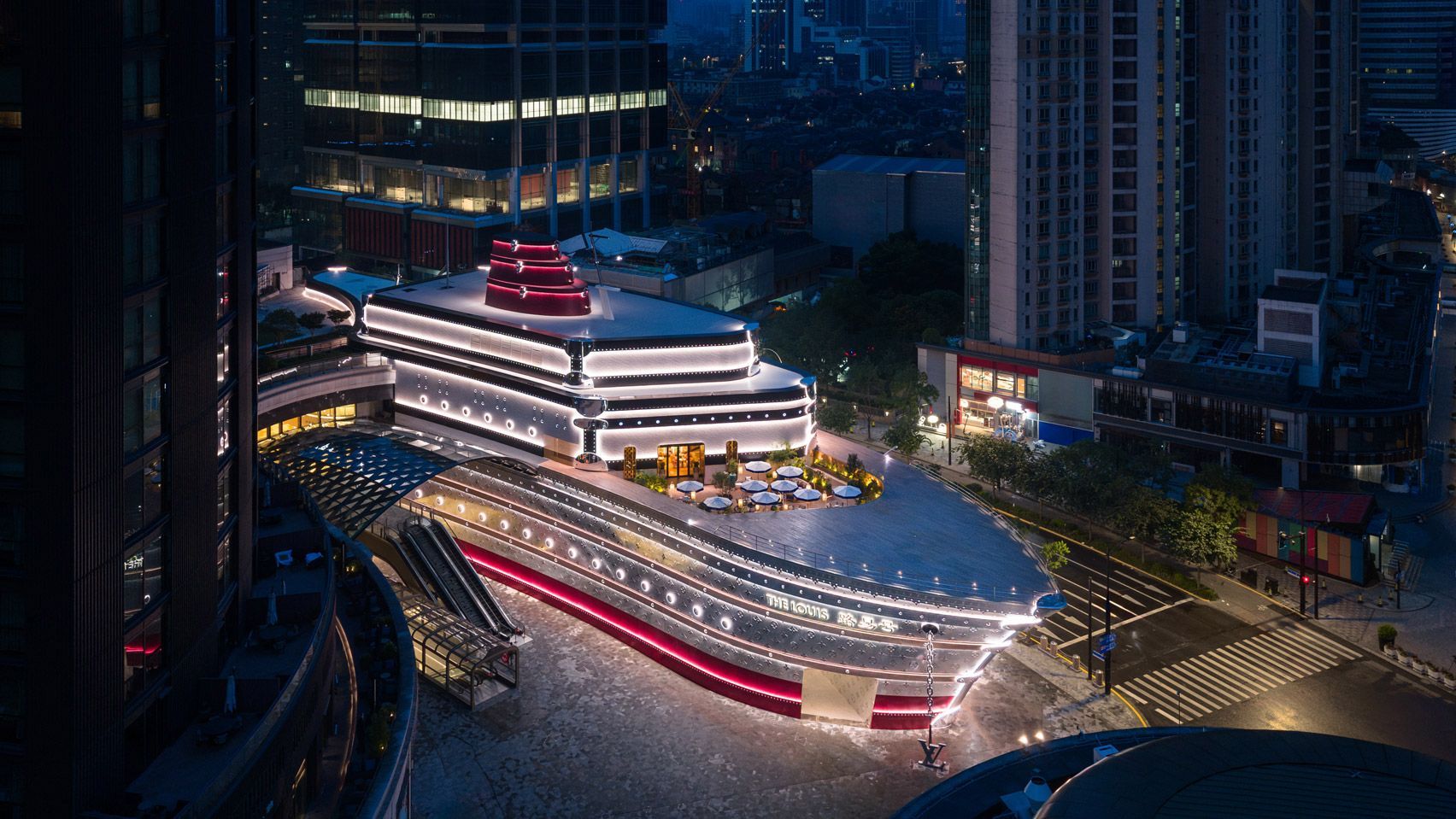
The partnership, as framed by Bernard Arnault, was premised on Formula 1 having become one of the most desirable sports in the world. The China dimension is central to that logic. Louis Vuitton's recent Shanghai activations, including The Louis concept space at HKRI Taikoo Hui and its maritime heritage exhibitions, have already demonstrated the brand's understanding that Chinese luxury consumers want cultural experience as much as product. An annual Grand Prix in Shanghai gives LVMH a moment of live, shared spectacle in the market that matters most. The trophy trunk is a piece of brand communication as much as it is a piece of luggage.
Other brands are moving with equal purpose. Ahead of this weekend's race, Tumi brought Lando Norris, the reigning world champion, onto a Douyin livestream to engage Chinese fans directly. It is a precise articulation of the opportunity: a global sports star, a platform built for the Chinese digital consumer, and a brand repositioning itself for a younger audience through the cultural equity Formula 1 now carries in China. The activation required no translation. The audience already knew who Norris was.
The Fan
What makes China's F1 audience distinctive is how it came to the sport. There was no decade-long television relationship, no childhood memory of watching a hero driver. The Chinese F1 fan, and particularly the Chinese female F1 fan, arrived largely through social media, streaming content and Drive to Survive, the Netflix documentary series that reframed Formula 1 as a character-driven drama rather than a technical sport. She followed the story on Douyin and Xiaohongshu, discussed it in fan communities, and eventually bought a ticket, a cap, or a team jacket.
This is a consumer who approaches Formula 1 the way she approaches any cultural object she has chosen to make part of her identity: with genuine enthusiasm, high aesthetic standards, and no particular loyalty to how things have always been done. The same consumer who cross-references a luxury handbag purchase across fifty Xiaohongshu posts before buying will apply the same rigour to deciding which team she supports and which brand collaborations she considers worth her attention. For luxury houses accustomed to building brand relationships over decades, the speed and intensity of Chinese F1 fandom represents both an opportunity and a challenge in equal measure.
On the Horizon
BYD, the Shenzhen-based electric vehicle manufacturer that has overtaken Tesla in global EV sales according to Reuters, has been reported to be exploring a Formula 1 team entry, with an acquisition of an existing team its preferred route. The FIA, motorsport's governing body, has previously signalled that a Chinese constructor would be welcomed. Nothing is confirmed. But the conversation is real, and its timing reflects the moment: Formula 1's 2026 regulations direct roughly half of total power output through the electric motor, a domain in which Chinese manufacturers have built formidable industrial expertise.
Whether or not BYD proceeds, the direction is clear. China's engagement with Formula 1 has moved well beyond that of a host city on the international calendar. The fans are invested. The brands are activating. The country's most ambitious industrial players are beginning to ask what deeper participation might look like.
For now, the most visible symbol of that investment remains the trophy trunk: made by Louis Vuitton's craftsmen in Asnières, handed to a teenage Italian winner in Shanghai, in front of a sold-out crowd that did not exist as an F1 audience five years ago. The Chinese Grand Prix has become one of the most commercially significant dates in the sport's calendar. The brands that understood this early are already in position. Those that have not taken China's F1 moment seriously are running out of laps.
Amy Weng is a China market expert and founder of Think East. She advises luxury houses, consumer brands, Swiss institutions, and senior executives seeking a deeper understanding of the Chinese market. Amy speaks regularly on topics including China’s digital landscape, Young China, and the forces reshaping Chinese consumer culture. Her work bridges the gap between Western brands and one of the world’s most sophisticated consumer audiences.
Interested in understanding China's consumer landscape for your brand? Get in touch now.